from math import pi, sin, cos

from pygame.font import Font

from esp_hadouken.pgfw.GameChild import GameChild
from esp_hadouken.pgfw.Vector import Vector

class Pedal(GameChild, Vector):

    def __init__(self, parent, index):
        GameChild.__init__(self, parent)
        self.effect = 0
        self.index = index
        self.display_active = self.check_command_line(self.parent.display_flag)
        self.reset()
        self.init_display()
        self.set_coefficients()

    def reset(self):
        Vector.__init__(self)

    def init_display(self):
        if self.display_active:
            self.display_surface = self.get_screen()
            self.coordinates = 0, (self.index + 1) * 20
            self.font = Font(self.parent.parent.font_path, 14)
            self.render()

    def render(self):
        string = str(self)
        self.text = self.font.render(string, False, (0, 0, 0), (255, 255, 255))
        self.string = string

    def set_coefficients(self):
        index = self.index
        cx = sin(pi * index / 4)
        cy = -cos(pi * index / 4)
        if cx < .000000001 and cx > -.0000000001:
            cx = 0
        if cy < .000000001 and cy > -.0000000001:
            cy = 0
        self.cx, self.cy = cx, cy

    def set_slopes(self):
        min_na_dist = self.parent.min_negative_acceleration_distance
        min_na = self.parent.min_negative_acceleration
        max_v = self.parent.parent.max_velocity
        initial_thrust = self.parent.initial_thrust
        peak_distance = self.parent.peak_distance
        peak_acceleration = self.parent.peak_acceleration
        self.tail_slope = (min_na - self.parent.max_negative_acceleration) / \
                          (-min_na_dist + max_v)
        self.rest_slope = (initial_thrust - min_na) / min_na_dist
        self.motion_slope = (peak_acceleration - initial_thrust) / peak_distance
        self.head_slope = -peak_acceleration / (max_v - peak_distance)

    def update(self, active):
        self.update_effect(active)
        self.set()
        self.display()

    def update_effect(self, active):
        if active:
            self.effect += self.parent.attack
        elif not active:
            self.effect -= self.parent.release
        self.constrain()

    def constrain(self):
        effect = self.effect
        if effect < 0 or effect > 1:
            if effect < 0:
                effect = 0
            else:
                effect = 1
            self.effect = effect

    def set(self):
        if self.effect:
            vx, vy = self.parent.parent
            cx, cy = self.cx, self.cy
            self.x = self.get_component(vx, cx)
            self.y = self.get_component(vy, cy)
        else:
            self.x = 0
            self.y = 0

    def get_component(self, velocity, coefficient):
        if coefficient < 0:
            velocity = -velocity
        max_v = self.parent.parent.max_velocity
        if not coefficient or velocity >= max_v:
            return 0
        if velocity <= -max_v:
            magnitude = -self.parent.max_negative_acceleration
        elif velocity <= -self.parent.min_negative_acceleration_distance:
            magnitude = self.tail_thrust(velocity)
        elif velocity <= 0:
            magnitude = self.rest_thrust(velocity)
        elif velocity <= self.parent.peak_distance:
            magnitude = self.motion_thrust(velocity)
        else:
            magnitude = self.head_thrust(velocity)
        return coefficient * self.effect * magnitude

    def are_same_sign(self, left, right):
        return left == 0 or right == 0 or abs(left) / left == abs(right) / right

    def tail_thrust(self, velocity):
        return (self.tail_slope * \
                (velocity + self.parent.min_negative_acceleration_distance)) + \
                self.parent.min_negative_acceleration

    def rest_thrust(self, velocity):
        return (self.rest_slope * velocity) + self.parent.initial_thrust

    def motion_thrust(self, velocity):
        return (self.motion_slope * (velocity - self.parent.peak_distance)) + \
               self.parent.peak_acceleration

    def head_thrust(self, velocity):
        return self.head_slope * (velocity - self.parent.parent.max_velocity)

    def display(self):
        if self.display_active:
            if self.string != str(self):
                self.render()
            self.display_surface.blit(self.text, self.coordinates)

    def __str__(self):
        return "[{0: .2f}, {1: .2f}] {2: .2f}".format(self.x, self.y,
                                                      self.effect)
from pygame import Color

from esp_hadouken.GameChild import *

class GlyphPalette(GameChild, list):

    def __init__(self, parent):
        GameChild.__init__(self, parent)
        list.__init__(self, [])
        self.set_interval_properties()
        self.populate()

    def set_interval_properties(self):
        length = self.get_configuration()["scoreboard-palette-length"]
        interval_count = 6
        self.interval_length = length / interval_count
        self.overflow = length % interval_count

    def populate(self):
        brightness = self.get_configuration()["scoreboard-palette-brightness"]
        self.add_interval([255, brightness, brightness], [0, 1, 0])
        self.add_interval([255, 255, brightness], [-1, 0, 0])
        self.add_interval([brightness, 255, brightness], [0, 0, 1])
        self.add_interval([brightness, 255, 255], [0, -1, 0])
        self.add_interval([brightness, brightness, 255], [1, 0, 0])
        self.add_interval([255, brightness, 255], [0, 0, -1])

    def add_interval(self, components, actions):
        for ii, action in enumerate(actions):
            if action == 1:
                components[ii] = 0
            elif action == -1:
                components[ii] = 255
        length = self.interval_length + (self.overflow > 0)
        self.overflow -= 1
        step = 255 / length
        for ii in range(length):
            self.append(Color(*components))
            for ii, action in enumerate(actions):
                if action == 1:
                    components[ii] += step
                elif action == -1:
                    components[ii] -= step
from pygame import Surface, Color, Rect

from esp_hadouken.GameChild import *
from esp_hadouken.Font import *

class Heading(GameChild, Surface):

    def __init__(self, parent):
        GameChild.__init__(self, parent)
        self.init_surface()
        self.set_rect()
        self.add_labels()
        self.render_title()

    def init_surface(self):
        parent = self.parent
        width = parent.get_width() - parent.get_padding()
        Surface.__init__(self, (width, parent.get_heading_height()))
        self.fill(Color(self.get_configuration()["scoreboard-heading-bg"]))

    def set_rect(self):
        rect = self.get_rect()
        offset = self.parent.get_padding() / 2
        rect.topleft = offset, offset
        self.rect = rect

    def add_labels(self):
        labels = []
        margin = self.get_margin()
        for ii in range(5):
            labels.append(Label(self, ii))
        self.labels = labels

    def render_title(self):
        config = self.get_configuration()
        size = config["scoreboard-heading-title-size"]
        text = config["scoreboard-heading-title"]
        color = Color(config["scoreboard-heading-title-color"])
        rend = Font(self, size).render(text, True, color)
        rect = rend.get_rect()
        offset = config["scoreboard-heading-title-offset"]
        rect.centery = self.get_rect().centery + offset
        rect.left = config["scoreboard-heading-title-indent"]
        self.blit(rend, rect)

    def get_margin(self):
        return self.get_configuration()["scoreboard-heading-margin"]

    def update(self):
        for label in self.labels:
            label.update()
        self.draw()

    def draw(self):
        self.parent.blit(self, self.rect)


class Label(GameChild, Surface):

    def __init__(self, parent, index):
        GameChild.__init__(self, parent)
        self.index = index
        self.init_surface()
        self.set_rect()

    def init_surface(self):
        parent = self.parent
        size = parent.get_height() - parent.get_margin()
        Surface.__init__(self, (size, size))
        self.paint()

    def paint(self):
        palette = self.get_palette()
        count = self.get_configuration()["scoreboard-heading-checker-count"]
        size = tuple([self.get_width() / count] * 2)
        for ii in range(count):
            for jj in range(count):
                rect = Rect((ii * size[0], jj * size[0]), size)
                self.fill(Color(palette[(ii + jj) % len(palette)]), rect)

    def get_palette(self):
        index = self.index
        if index == 0:
            level = "octo"
        elif index == 1:
            level = "horse"
        elif index == 2:
            level = "diortem"
        elif index == 3:
            level = "circulor"
        else:
            level = "tooth"
        return self.get_configuration()[level + "-level-palette"]

    def set_rect(self):
        rect = self.get_rect()
        rect.left = self.calculate_indent()
        rect.centery = self.parent.get_rect().centery
        self.rect = rect

    def calculate_indent(self):
        parent = self.parent
        width = parent.get_width()
        columns = parent.parent.get_column_widths()
        offset = (columns[3] * width - self.get_width()) / 2
        return sum(columns[:self.index + 3]) * width + offset

    def update(self):
        self.draw()

    def draw(self):
        self.parent.blit(self, self.rect)
216.73.216.220
216.73.216.220
216.73.216.220
 
June 29, 2013

A few weeks ago, for Fishing Jam, I made a fishing simulation from what was originally designed to be a time attack arcade game. In the program, Dark Stew, the player controls Aphids, an anthropod who fishes for aquatic creatures living in nine pools of black water.
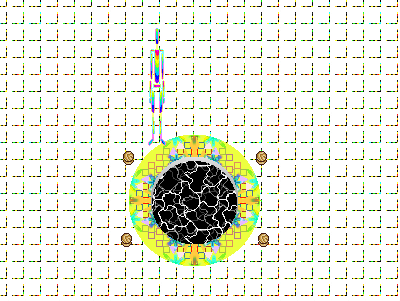

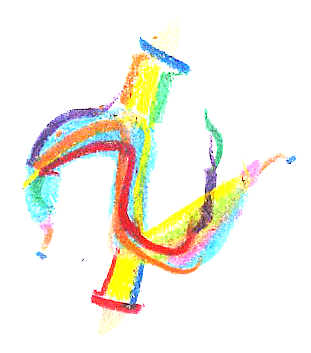
Fishing means waiting by the pool with the line in. The longer you wait before pulling the line out, the more likely a creature will appear. Aside from walking, it's the only interaction in the game. The creatures are drawings of things you maybe could find underwater in a dream.
The background music is a mix of clips from licensed to share songs on the Free Music Archive. Particularly, Seed64 is an album I used a lot of songs from. The full list of music credits is in the game's README file.

I'm still planning to use the original design in a future version. There would be a reaction-based mini game for catching fish, and the goal would be to catch as many fish as possible within the time limit. I also want to add details and obstacles to the background, which is now a little boring, being a plain, tiled, white floor.

If you want to look at all the drawings or hear the music in the context of the program, there are Windows and source versions available. The source should work on any system with Python and Pygame. If it doesn't, bug reports are much appreciated. Comments are also welcome :)

Dark Stew: Windows, Pygame Source
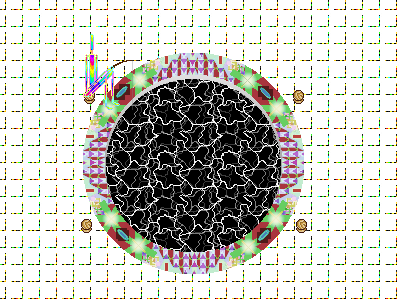
I wrote in my last post that I would be working on an old prototype about searching a cloud for organisms for Fishing Jam. I decided to wait a while before developing that game, tentatively titled Xenographic Barrier. Its main interactive element is a first-person scope/flashlight, so I'd like to make a Wii version of it.

I'm about to start working on a complete version of Ball & Cup. If I make anything interesting for it, I'll post something. There are a lot of other things I want to write about, like game analyses, my new GP2X and arcades in Korea, and there's still music to release. Lots of fun stuff coming!